We may earn a referral commission from some links on this page. It doesn't change your price or our recommendations.
Brand review · Sleipner (Side-Power)
Sleipner (Side-Power) review: what they publish and what owners report
The tunnel thruster most yards fit, with retractables and external stern units beside it. Sold in the US through Imtra and its dealers.
- Haul-out to install
- Sold through Imtra
- Full electrical figures per model
How this review was made
From the documents and from owners: nobody here has installed or run one. It draws on the maker's product pages, FAQ, warranty statement, Leisure Product catalog and 2026 model-range sheet, read on 23 September 2026. It also uses the maker's current installation guides and the 2015 copies, Imtra's listings, and owner reports on the forums from 2011 to 2026. Where the maker's own documents disagree with each other, you get both figures. The prices in the thruster finder, our free tool that matches a thruster to your boat, are Defender's, captured 28 August 2026. The list prices on this page are Imtra's.
- Models 71 › Sold in the US today, each with its own page
- Thrust 66 lb to 2425 lb Sleipner's ratings
- Unit price $1,485 to $49,230 US dealers, the unit alone
- Price per lb of thrust $13.34 to $82.05 Sleipner SE250/300TC lowest, Sleipner ERL100 eVision highest
- Warranty 2 years See Know before you buy
- Who installs it DIY level 2 to 3 › Split with the yard to wiring prep only
About Sleipner
Sleipner Motor AS started in 1908, and its factory has been in Fredrikstad, Norway since 1910. It turned to thrusters in the early 1980s. Most dealers and owners still call it Side-Power, the name it sold under until 2021.
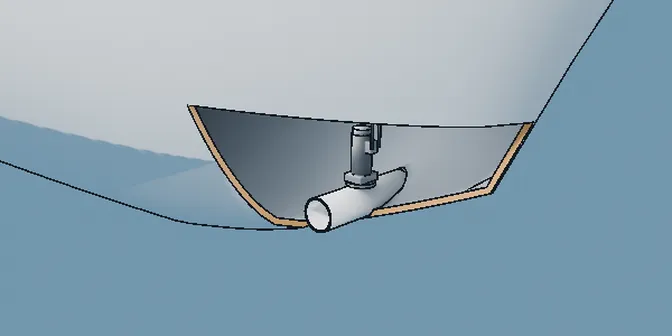
It has the biggest range on this site: most of the A tube bored straight through the hull below the waterline, with a propeller in the middle of it. It is the conventional thruster. Installing one is mostly a labor job rather than a hardware one. thrusters we price are Sleipner's, in 18 series, from a 66 lb unit for a runabout to a 2,425 lb A thruster that lives inside the hull and drops down through a hatch when you press the button, then pulls back up. It leaves no permanent hole in the water flow.. Most sizes come on/off (SE) or proportional (SEP), and it calls itself the world's top-selling thruster brand for recreational boats.
Read more
In the US it sells through Imtra of New Bedford, Massachusetts and the dealers Imtra supplies. By its own figures it employs about 230 people.
The warranty. Sleipner gives 2 years for leisure use and 1 for commercial use. It transfers to the next owner, and it starts no later than 18 months after the boat's first launch.
One thing to know. Sleipner rates thrust at the voltage that reaches the motor, and prints the 12 V figure beside it. Compare makers on the same voltage. Why the thrust is rated at 10.5 volts.
The short answer
The SE, SEP and E series go through the bow below the waterline in a tube. The range also has A thruster that lives inside the hull and drops down through a hatch when you press the button, then pulls back up. It leaves no permanent hole in the water flow. and the SX external units. Every version needs the boat out of the water.
That is most boats. It is what a builder fits and a yard knows, and more owners write about it on the forums we read than about any other brand here.
Sleipner rates thrust at the voltage that reaches the motor, 10.5 V on a 12 V boat, and prints the 12 V figure beside it. Every product page carries the full electrical case, and owners report long service.
The on/off motors run 2 to 3 minutes before they shut off to cool. The current is large: the 12 V SE100 draws 740 A. The maker's own documents disagree in places, and one owner's retractable couplings sheared again and again on a new boat.
Imtra lists the 12 V SE60 at $2,550, plus a separate tariff line. Defender's prices ran 87% to 90% of Imtra's list on the models both carry. That is the unit alone. Our yard estimate for the SE60 on a sailboat is $9,517 to $19,384 all in.
Which boats it fits
From the rules of the thruster finder, the tool here that matches a thruster to your boat, at every length each kind of boat is built in.
Fits six kinds of boat
66 of 71 models
- Sleipner SE25/110S 23 to 26 ft
- Sleipner SE30/125S DC 26 to 30 ft
- Sleipner SE30/125S-IP 26 to 30 ft
- Sleipner SE40/125S 28 to 37 ft
- Sleipner SEP40/125S-1IP 28 to 37 ft
- Sleipner SE40/125S-IP 29 to 37 ft
- Sleipner SEP40/125S 29 to 37 ft
- Sleipner SX35 Compact Stern 33 to 36 ft
- Sleipner SEP50/140S 33 to 39 ft
- Sleipner SEP50/140S-IP 33 to 39 ft
- Sleipner SE50/140S 33 to 40 ft
- Sleipner SE60/185S 36 to 41 ft
- Sleipner SE60/185S-IP 36 to 41 ft
- Sleipner SEP60/185S 36 to 41 ft
- Sleipner SEP60/185S-IP 36 to 41 ft
- Sleipner EX95S 36 to 53 ft
- Sleipner SX50 Compact 39 ft
- Sleipner EX70C 40 to 47 ft
- Sleipner SE80/185T 41 to 52 ft
- Sleipner SE80/185T-IP 41 to 52 ft
- Sleipner SEP80/185T 41 to 52 ft
- Sleipner SR80 41 to 53 ft
- Sleipner SRP80 PRO 41 to 53 ft
- Sleipner SRV80 41 to 53 ft
- Sleipner SRVP80 PRO 41 to 53 ft
- Sleipner SEP80/185T-IP 41 to 53 ft
- Sleipner ERL100 eVision 42 to 61 ft
- Sleipner ERV100 eVision 42 to 61 ft
- Sleipner E100/185T 42 to 68 ft
- Sleipner SE100/185T 45 to 60 ft
- Sleipner SEP100/185T 45 to 60 ft
- Sleipner SRV100 45 to 61 ft
- Sleipner SRVP100 PRO 45 to 61 ft
- Sleipner SE100/185T-IP 45 to 61 ft
- Sleipner SEP100/185T-IP 45 to 61 ft
- Sleipner E120/215T 46 to 70 ft
- Sleipner SX80 48 to 53 ft
- Sleipner SXP80 PRO 48 to 53 ft
- Sleipner EX180D 48 to 64 ft
- Sleipner E130/250T 48 to 69 ft
- Sleipner SXE100 eVision 49 to 61 ft
- Sleipner SE120/215T-24V 49 to 64 ft
- Sleipner SEP120/215T-24V 49 to 66 ft
- Sleipner E150/215T 51 to 70 ft
- Sleipner SE130/250T 52 to 68 ft
- Sleipner SEP130/250T 52 to 68 ft
- Sleipner SX100 53 to 61 ft
- Sleipner SXP100 PRO 53 to 61 ft
- Sleipner SRV130 53 to 68 ft
- Sleipner E170/250TC 54 to 77 ft
- Sleipner ERL170 eVision 54 to 79 ft
- Sleipner ERV170 eVision 54 to 79 ft
- Sleipner SE150/215T-24V 56 to 70 ft
- Sleipner SE170/250TC 60 to 77 ft
- Sleipner SEP170/250TC-IP 60 to 77 ft
- Sleipner ERV210 eVision 60 to 80 ft
- Sleipner E210/250TC 60 to 80 ft
- Sleipner E250/300TC 65 to 80 ft
- Sleipner SE210/250TC 65 to 80 ft
- Sleipner SEP210/250TC 65 to 80 ft
- Sleipner E300/300TC 72 to 80 ft
- Sleipner SE250/300TC 72 to 80 ft
- Sleipner E340 eVision 76 to 80 ft
- Sleipner SE300/300TC 76 to 80 ft
- Sleipner E350 HD eVision 77 to 80 ft
- Sleipner E350 HDB eVision 77 to 80 ft
57 of 71 models
- Sleipner SE30/125S DC 30 ft
- Sleipner SE30/125S-IP 30 ft
- Sleipner SE40/125S 30 to 35 ft
- Sleipner SE40/125S-IP 30 to 35 ft
- Sleipner SEP40/125S 30 to 35 ft
- Sleipner SEP40/125S-1IP 30 to 35 ft
- Sleipner SE50/140S 30 to 39 ft
- Sleipner SEP50/140S 30 to 39 ft
- Sleipner SEP50/140S-IP 30 to 39 ft
- Sleipner SE60/185S 30 to 41 ft
- Sleipner SE60/185S-IP 30 to 41 ft
- Sleipner SEP60/185S 30 to 41 ft
- Sleipner SEP60/185S-IP 30 to 41 ft
- Sleipner SR80 31 to 49 ft
- Sleipner SRP80 PRO 31 to 49 ft
- Sleipner SRV80 31 to 49 ft
- Sleipner SRVP80 PRO 31 to 49 ft
- Sleipner SEP80/185T-IP 31 to 49 ft
- Sleipner SE80/185T 32 to 49 ft
- Sleipner SE80/185T-IP 32 to 49 ft
- Sleipner SEP80/185T 32 to 49 ft
- Sleipner SE100/185T 34 to 54 ft
- Sleipner SEP100/185T 34 to 54 ft
- Sleipner ERL100 eVision 36 to 50 ft
- Sleipner ERV100 eVision 36 to 50 ft
- Sleipner SRV100 36 to 54 ft
- Sleipner SRVP100 PRO 36 to 54 ft
- Sleipner SE100/185T-IP 36 to 54 ft
- Sleipner SEP100/185T-IP 36 to 54 ft
- Sleipner E130/250T 38 to 57 ft
- Sleipner SEP120/215T-24V 38 to 59 ft
- Sleipner SE120/215T-24V 39 to 59 ft
- Sleipner SRV130 39 to 64 ft
- Sleipner SE130/250T 39 to 64 ft
- Sleipner SEP130/250T 39 to 64 ft
- Sleipner E100/185T 40 to 50 ft
- Sleipner E120/215T 40 to 55 ft
- Sleipner E150/215T 40 to 62 ft
- Sleipner SE150/215T-24V 42 to 68 ft
- Sleipner ERL170 eVision 45 to 66 ft
- Sleipner ERV170 eVision 45 to 66 ft
- Sleipner E170/250TC 45 to 66 ft
- Sleipner SE170/250TC 45 to 73 ft
- Sleipner SEP170/250TC-IP 45 to 73 ft
- Sleipner SE210/250TC 50 to 80 ft
- Sleipner SEP210/250TC 50 to 80 ft
- Sleipner ERV210 eVision 51 to 73 ft
- Sleipner E210/250TC 51 to 73 ft
- Sleipner E250/300TC 54 to 80 ft
- Sleipner SE250/300TC 54 to 80 ft
- Sleipner E340 eVision 57 to 80 ft
- Sleipner E350 HD eVision 57 to 80 ft
- Sleipner E350 HDB eVision 57 to 80 ft
- Sleipner E300/300TC 65 to 80 ft
- Sleipner SE300/300TC 65 to 80 ft
- Sleipner SAC450 68 to 80 ft
- Sleipner SAC520 77 to 80 ft
49 of 71 models
- Sleipner SE30/125S DC 30 ft
- Sleipner SE30/125S-IP 30 ft
- Sleipner SE40/125S 32 to 37 ft
- Sleipner SEP40/125S-1IP 32 to 37 ft
- Sleipner SE40/125S-IP 33 to 37 ft
- Sleipner SEP40/125S 33 to 37 ft
- Sleipner SEP50/140S 38 to 39 ft
- Sleipner SEP50/140S-IP 38 to 39 ft
- Sleipner SE50/140S 38 to 40 ft
- Sleipner SE60/185S 40 to 41 ft
- Sleipner SE60/185S-IP 40 to 41 ft
- Sleipner SEP60/185S 40 to 41 ft
- Sleipner SEP60/185S-IP 40 to 41 ft
- Sleipner SE80/185T 46 to 52 ft
- Sleipner SE80/185T-IP 46 to 52 ft
- Sleipner SEP80/185T 46 to 52 ft
- Sleipner SR80 46 to 53 ft
- Sleipner SRP80 PRO 46 to 53 ft
- Sleipner SRV80 46 to 53 ft
- Sleipner SRVP80 PRO 46 to 53 ft
- Sleipner SEP80/185T-IP 46 to 53 ft
- Sleipner ERL100 eVision 47 to 61 ft
- Sleipner ERV100 eVision 47 to 61 ft
- Sleipner E100/185T 47 to 70 ft
- Sleipner SE100/185T 51 to 60 ft
- Sleipner SEP100/185T 51 to 60 ft
- Sleipner SRV100 51 to 61 ft
- Sleipner SRVP100 PRO 51 to 61 ft
- Sleipner SE100/185T-IP 51 to 61 ft
- Sleipner SEP100/185T-IP 51 to 61 ft
- Sleipner E120/215T 52 to 70 ft
- Sleipner E130/250T 54 to 69 ft
- Sleipner SE120/215T-24V 55 to 64 ft
- Sleipner SEP120/215T-24V 55 to 66 ft
- Sleipner E150/215T 58 to 70 ft
- Sleipner SE130/250T 59 to 68 ft
- Sleipner SEP130/250T 59 to 68 ft
- Sleipner SRV130 60 to 68 ft
- Sleipner E170/250TC 61 to 77 ft
- Sleipner ERL170 eVision 61 to 79 ft
- Sleipner ERV170 eVision 61 to 79 ft
- Sleipner SE150/215T-24V 63 to 70 ft
- Sleipner SE170/250TC 68 to 77 ft
- Sleipner SEP170/250TC-IP 68 to 77 ft
- Sleipner ERV210 eVision 68 to 80 ft
- Sleipner E210/250TC 68 to 80 ft
- Sleipner E250/300TC 74 to 80 ft
- Sleipner SE210/250TC 74 to 80 ft
- Sleipner SEP210/250TC 74 to 80 ft
66 of 71 models
- Sleipner SE25/110S 23 to 26 ft
- Sleipner SE30/125S DC 26 to 30 ft
- Sleipner SE30/125S-IP 26 to 30 ft
- Sleipner SE40/125S 28 to 37 ft
- Sleipner SEP40/125S-1IP 28 to 37 ft
- Sleipner SE40/125S-IP 29 to 37 ft
- Sleipner SEP40/125S 29 to 37 ft
- Sleipner SX35 Compact Stern 33 to 36 ft
- Sleipner SEP50/140S 33 to 39 ft
- Sleipner SEP50/140S-IP 33 to 39 ft
- Sleipner SE50/140S 33 to 40 ft
- Sleipner SE60/185S 35 to 41 ft
- Sleipner SE60/185S-IP 35 to 41 ft
- Sleipner SEP60/185S 35 to 41 ft
- Sleipner SEP60/185S-IP 35 to 41 ft
- Sleipner EX95S 36 to 53 ft
- Sleipner SX50 Compact 39 ft
- Sleipner EX70C 40 to 47 ft
- Sleipner SE80/185T 41 to 52 ft
- Sleipner SE80/185T-IP 41 to 52 ft
- Sleipner SEP80/185T 41 to 52 ft
- Sleipner SR80 41 to 53 ft
- Sleipner SRP80 PRO 41 to 53 ft
- Sleipner SRV80 41 to 53 ft
- Sleipner SRVP80 PRO 41 to 53 ft
- Sleipner SEP80/185T-IP 41 to 53 ft
- Sleipner ERL100 eVision 41 to 61 ft
- Sleipner ERV100 eVision 41 to 61 ft
- Sleipner E100/185T 41 to 67 ft
- Sleipner SE100/185T 45 to 60 ft
- Sleipner SEP100/185T 45 to 60 ft
- Sleipner SRV100 45 to 61 ft
- Sleipner SRVP100 PRO 45 to 61 ft
- Sleipner SE100/185T-IP 45 to 61 ft
- Sleipner SEP100/185T-IP 45 to 61 ft
- Sleipner E120/215T 45 to 70 ft
- Sleipner EX180D 47 to 64 ft
- Sleipner E130/250T 47 to 69 ft
- Sleipner SX80 48 to 53 ft
- Sleipner SXP80 PRO 48 to 53 ft
- Sleipner SE120/215T-24V 48 to 64 ft
- Sleipner SEP120/215T-24V 48 to 66 ft
- Sleipner SXE100 eVision 49 to 61 ft
- Sleipner E150/215T 50 to 70 ft
- Sleipner SRV130 52 to 68 ft
- Sleipner SE130/250T 52 to 68 ft
- Sleipner SEP130/250T 52 to 68 ft
- Sleipner SX100 53 to 61 ft
- Sleipner SXP100 PRO 53 to 61 ft
- Sleipner E170/250TC 53 to 77 ft
- Sleipner ERL170 eVision 53 to 79 ft
- Sleipner ERV170 eVision 53 to 79 ft
- Sleipner SE150/215T-24V 55 to 70 ft
- Sleipner SE170/250TC 59 to 77 ft
- Sleipner SEP170/250TC-IP 59 to 77 ft
- Sleipner ERV210 eVision 59 to 80 ft
- Sleipner E210/250TC 59 to 80 ft
- Sleipner E250/300TC 65 to 80 ft
- Sleipner SE210/250TC 65 to 80 ft
- Sleipner SEP210/250TC 65 to 80 ft
- Sleipner E300/300TC 71 to 80 ft
- Sleipner SE250/300TC 71 to 80 ft
- Sleipner E340 eVision 75 to 80 ft
- Sleipner SE300/300TC 75 to 80 ft
- Sleipner E350 HD eVision 76 to 80 ft
- Sleipner E350 HDB eVision 76 to 80 ft
63 of 71 models
- Sleipner SX35 Compact Stern 35 to 36 ft
- Sleipner SE40/125S 35 to 37 ft
- Sleipner SE40/125S-IP 35 to 37 ft
- Sleipner SEP40/125S 35 to 37 ft
- Sleipner SEP40/125S-1IP 35 to 37 ft
- Sleipner SEP50/140S 35 to 39 ft
- Sleipner SEP50/140S-IP 35 to 39 ft
- Sleipner SE50/140S 35 to 40 ft
- Sleipner SE60/185S 35 to 41 ft
- Sleipner SE60/185S-IP 35 to 41 ft
- Sleipner SEP60/185S 35 to 41 ft
- Sleipner SEP60/185S-IP 35 to 41 ft
- Sleipner EX95S 36 to 53 ft
- Sleipner SX50 Compact 39 ft
- Sleipner EX70C 40 to 47 ft
- Sleipner SE80/185T 41 to 52 ft
- Sleipner SE80/185T-IP 41 to 52 ft
- Sleipner SEP80/185T 41 to 52 ft
- Sleipner SR80 41 to 53 ft
- Sleipner SRP80 PRO 41 to 53 ft
- Sleipner SRV80 41 to 53 ft
- Sleipner SRVP80 PRO 41 to 53 ft
- Sleipner SEP80/185T-IP 41 to 53 ft
- Sleipner ERL100 eVision 41 to 61 ft
- Sleipner ERV100 eVision 41 to 61 ft
- Sleipner E100/185T 41 to 67 ft
- Sleipner SE100/185T 45 to 60 ft
- Sleipner SEP100/185T 45 to 60 ft
- Sleipner SRV100 45 to 61 ft
- Sleipner SRVP100 PRO 45 to 61 ft
- Sleipner SE100/185T-IP 45 to 61 ft
- Sleipner SEP100/185T-IP 45 to 61 ft
- Sleipner E120/215T 45 to 70 ft
- Sleipner EX180D 47 to 64 ft
- Sleipner E130/250T 47 to 69 ft
- Sleipner SX80 48 to 53 ft
- Sleipner SXP80 PRO 48 to 53 ft
- Sleipner SE120/215T-24V 48 to 64 ft
- Sleipner SEP120/215T-24V 48 to 66 ft
- Sleipner SXE100 eVision 49 to 61 ft
- Sleipner E150/215T 50 to 70 ft
- Sleipner SRV130 52 to 68 ft
- Sleipner SE130/250T 52 to 68 ft
- Sleipner SEP130/250T 52 to 68 ft
- Sleipner SX100 53 to 61 ft
- Sleipner SXP100 PRO 53 to 61 ft
- Sleipner E170/250TC 53 to 77 ft
- Sleipner ERL170 eVision 53 to 79 ft
- Sleipner ERV170 eVision 53 to 79 ft
- Sleipner SE150/215T-24V 55 to 70 ft
- Sleipner SE170/250TC 59 to 77 ft
- Sleipner SEP170/250TC-IP 59 to 77 ft
- Sleipner ERV210 eVision 59 to 80 ft
- Sleipner E210/250TC 59 to 80 ft
- Sleipner E250/300TC 65 to 80 ft
- Sleipner SE210/250TC 65 to 80 ft
- Sleipner SEP210/250TC 65 to 80 ft
- Sleipner E300/300TC 71 to 80 ft
- Sleipner SE250/300TC 71 to 80 ft
- Sleipner E340 eVision 75 to 80 ft
- Sleipner SE300/300TC 75 to 80 ft
- Sleipner E350 HD eVision 76 to 80 ft
- Sleipner E350 HDB eVision 76 to 80 ft
26 of 71 models
- Sleipner SE40/125S 36 to 37 ft
- Sleipner SEP40/125S-1IP 36 to 37 ft
- Sleipner SE40/125S-IP 37 ft
- Sleipner SEP40/125S 37 ft
- Sleipner SE80/185T 52 ft
- Sleipner SE80/185T-IP 52 ft
- Sleipner SEP80/185T 52 ft
- Sleipner SR80 52 to 53 ft
- Sleipner SRP80 PRO 52 to 53 ft
- Sleipner SRV80 52 to 53 ft
- Sleipner SRVP80 PRO 52 to 53 ft
- Sleipner SEP80/185T-IP 52 to 53 ft
- Sleipner ERL100 eVision 53 to 61 ft
- Sleipner ERV100 eVision 53 to 61 ft
- Sleipner E100/185T 53 to 65 ft
- Sleipner SE100/185T 57 to 60 ft
- Sleipner SEP100/185T 57 to 60 ft
- Sleipner SRV100 57 to 61 ft
- Sleipner SRVP100 PRO 57 to 61 ft
- Sleipner SE100/185T-IP 57 to 61 ft
- Sleipner SEP100/185T-IP 57 to 61 ft
- Sleipner E120/215T 58 to 65 ft
- Sleipner E130/250T 60 to 65 ft
- Sleipner SE120/215T-24V 62 to 64 ft
- Sleipner SEP120/215T-24V 62 to 65 ft
- Sleipner E150/215T 64 to 65 ft
Not listed for
Pick a series
Fourteen lines. Each one opens its models, every model with its own page, price and parts.
SE
The base range: on/off, with a brushed motor.
- Thrust
- 66 lb to 750 lb
- Unit
- $1,485 to $12,850
See the 19 models
- Sleipner SE25/110S66 lb, $1,485
- Sleipner SE30/125S DC88 lb, $1,755
- Sleipner SE30/125S-IP88 lb, $3,195
- Sleipner SE40/125S105 lb, $1,845
- Sleipner SE40/125S-IP106 lb, $3,195
- Sleipner SE50/140S136 lb, $2,160
- Sleipner SE60/185S161 lb, $2,295
- Sleipner SE60/185S-IP161 lb, $3,330
- Sleipner SE80/185T212 lb, $3,285
- Sleipner SE80/185T-IP212 lb, $4,590
- Sleipner SE100/185T256 lb, $4,455
- Sleipner SE100/185T-IP256 lb, $6,300
- Sleipner SE120/215T-24V306 lb, $4,905
- Sleipner SE130/250T352 lb, $5,670
- Sleipner SE150/215T-24V400 lb, $5,895
- Sleipner SE170/250TC463 lb, $6,264
- Sleipner SE210/250TC550 lb, $8,325
- Sleipner SE250/300TC661 lb, $8,820
- Sleipner SE300/300TC750 lb, $12,850
SEP
Adds proportional control: the joystick sets how hard it pushes.
- Thrust
- 105 lb to 550 lb
- Unit
- $4,545 to $9,045
See the 14 models
- Sleipner SEP40/125S106 lb, $4,545
- Sleipner SEP40/125S-1IP105 lb, $5,760
- Sleipner SEP50/140S137 lb, $5,350
- Sleipner SEP50/140S-IP137 lb, $6,650
- Sleipner SEP60/185S161 lb, $4,995
- Sleipner SEP60/185S-IP161 lb, $5,895
- Sleipner SEP80/185T212 lb, $5,895
- Sleipner SEP80/185T-IP212 lb, $6,975
- Sleipner SEP100/185T256 lb, $6,975
- Sleipner SEP100/185T-IP256 lb, $8,190
- Sleipner SEP120/215T-24V306 lb, $6,291
- Sleipner SEP130/250T352 lb, $7,290
- Sleipner SEP170/250TC-IP463 lb, $9,045
- Sleipner SEP210/250TC550 lb, $9,023
E-series eVision
Adds a brushless eVision motor, proportional and rated to run continuously at full thrust.
- Thrust
- 220 lb to 772 lb
- Unit
- $6,885 to $31,000
See the 11 models
- Sleipner E100/185T220 lb, $6,885
- Sleipner E120/215T265 lb, $7,335
- Sleipner E130/250T287 lb, $7,650
- Sleipner E150/215T331 lb, $7,875
- Sleipner E170/250TC375 lb, $8,325
- Sleipner E210/250TC463 lb, $10,125
- Sleipner E250/300TC551 lb, $11,025
- Sleipner E300/300TC661 lb, $12,825
- Sleipner E340 eVision750 lb, $15,250
- Sleipner E350 HD eVision772 lb, $17,750
- Sleipner E350 HDB eVision772 lb, $31,000
SAC
Runs on three-phase AC from the generator through a speed controller, for yachts too big for a battery bank to feed.
- Thrust
- 992 lb to 2425 lb
- Unit
- $28,500 to $49,230
See the 5 models
- Sleipner SAC450992 lb, $28,500
- Sleipner SAC5201146 lb, $30,300
- Sleipner SAC7001543 lb, $40,700
- Sleipner SAC9001984 lb, $49,230
- Sleipner SAC11002425 lb, $48,000
SR
The base retractable, on/off: it drops out of the hull to dock and tucks away under way.
- Thrust
- 212 lb
- Unit
- $11,850
SRV
Stands the motor vertical, which Sleipner says eases shock in steep waves. It needs headroom above the hull.
- Thrust
- 212 lb to 353 lb
- Unit
- $11,000 to $22,730
See the 3 models
- Sleipner SRV80212 lb, $11,000
- Sleipner SRV100256 lb, $11,750
- Sleipner SRV130353 lb, $22,730
SRP PRO
Adds speed control (PRO) to the SR.
- Thrust
- 212 lb
- Unit
- $14,700
SRVP PRO
Adds speed control (PRO) to the vertical-motor SRV.
- Thrust
- 212 lb to 256 lb
- Unit
- $10,510 to $13,070
See the 2 models
- Sleipner SRVP80 PRO212 lb, $10,510
- Sleipner SRVP100 PRO256 lb, $13,070
ERL eVision
Puts the brushless eVision motor in the low-profile retractable, with speed control built in.
- Thrust
- 220 lb to 375 lb
- Unit
- $18,050 to $29,500
See the 2 models
- Sleipner ERL100 eVision220 lb, $18,050
- Sleipner ERL170 eVision375 lb, $29,500
ERV eVision
The eVision retractable with its motor standing vertical, on counter-rotating twin propellers.
- Thrust
- 220 lb to 463 lb
- Unit
- $14,500 to $28,545
See the 3 models
- Sleipner ERV100 eVision220 lb, $14,500
- Sleipner ERV170 eVision375 lb, $26,455
- Sleipner ERV210 eVision463 lb, $28,545
SX
On/off units bolted to the outside of the hull at the stern, for a boat with no room for a tunnel. The SX80 and SX100 are made for twin stern drives.
- Thrust
- 93 lb to 256 lb
- Unit
- $3,870 to $9,750
See the 4 models
- Sleipner SX35 Compact Stern93 lb, $3,870
- Sleipner SX50 Compact137 lb, $4,365
- Sleipner SX80212 lb, $8,750
- Sleipner SX100256 lb, $9,750
SXP PRO
Adds variable speed (PRO) to the SX stern units.
- Thrust
- 212 lb to 256 lb
- Unit
- $10,500 to $12,500
See the 2 models
- Sleipner SXP80 PRO212 lb, $10,500
- Sleipner SXP100 PRO256 lb, $12,500
SXE eVision
Puts the brushless eVision motor in the SX100, rated to run continuously at full thrust.
- Thrust
- 220 lb
- Unit
- $12,250
EX
Pods bolted under the hull at the bow or stern, for displacement and semi-planing boats. Sleipner names them by a thrust 1.4 times the measured figure.
- Thrust
- 148 lb to 287 lb
- Unit
- $9,450 to $17,750
See the 3 models
- Sleipner EX70C148 lb, $9,600
- Sleipner EX95S148 lb, $9,450
- Sleipner EX180D287 lb, $17,750
Related videos
Three from Sleipner’s own channel and three from other channels: owner installs, reviews and service. Each one is labeled. They play from YouTube only when you tap. Each model’s page has the ones about that model.
Know before you buy
The same six slots as every product page, for the whole range.
Price per pound of thrust
$13.34 to $82.05The Sleipner SE250/300TC costs the least per pound. The Sleipner ERL100 eVision costs the most.
Unit prices over Sleipner’s thrust, 71 priced models.Controls
On/off on the SE, SR and SX. The SEP, PRO and eVision units are proportional: the joystick sets how hard it pushes.
- Side-Power 8950 G touch panel, one thruster, $219.21 at Fisheries Supply
- Side-Power PJC211 S-Link LCD panel and joystick, one thruster, $974.25 at Fisheries Supply
Service and warranty
Sleipner gives 2 years for leisure use and 1 for commercial use. It transfers to the next owner, and it starts no later than 18 months after the boat's first launch.
See Sleipner’s warranty Sleipner's warranty statement, effective 1 April 2022.Special mentions
Sleipner rates thrust at the voltage that reaches the motor, and prints the 12 V figure beside it.
Gas engine? Many SE and SEP sizes come ignition-protected, such as the SE60/185S-IP.
A yacht too big for a battery bank? The SAC series runs on AC from the generator.
What to weigh
The on/off motors run only a few minutes before they shut off to cool.
The current is large on 12 V, so the battery cable is heavy and the battery sits close to the unit.
Every version goes in with the boat out of the water.
Strengths and limitations
Each line below names its source. Three of the limitations are disagreements between the maker's own documents. One is a case with only the owner's side on record.
What holds up
- Thrust is rated at the voltage a boat delivers: 10.5 volts on a 12 V system and 21 on a 24 V one, with the 12 and 24 V figure printed beside it "only for comparison reasons". The SE100 is their own example: 100 kg at 10.5 V, 116 at 12. No other brand on this site publishes both.
- Every product page carries the full electrical case: nominal current, the fuse size, the minimum battery in DIN, SAE and EN cranking amps, the tunnel diameter, the minimum water depth and tunnel length, the wall thickness, and the installation manual under a Documents tab. The 2026 catalog prints the whole range on two pages.
- Long service on record. "I've had two Side Power thrusters on my boat for 10+ years now and never had a problem with either one. I change the sacrificial anodes on them every year." "Our Side Power has served us very well." One owner's two Optima batteries lasted into their eighth year on a converted 24 V SE100.
- The propeller is the part built to break. A bow unit that swallowed a dock line ran the rest of the season and was found with two of five blades gone and the drive pin intact: "I think the prop is designed to break if it gets jammed up. Easy and cheap to replace." Another owner broke three blades in eight years, twice on fish.
- A written warranty with a date on it: 2 years leisure, 1 commercial, transferable, repair or replacement returned "at the Warrantor's expense", and a refund route if repair fails after "a reasonable number of opportunities". Spares for every current model are listed by exploded view, and a separate list covers thrusters discontinued since 1998.
- The published safety features are specific. Intelligent Power Control detects a "flapping" solenoid on a weak battery and stops trying, and "will STOP THE THRUSTER" if a solenoid welds in. The control panels turn themselves off after about 6 minutes without use and need two buttons to wake.
- A US distributor with stock and a phone that owners say works: "They are very helpful and knowledgeable." "I keep telling everyone with thruster issues to talk to imtra.com". The one dissent is from 2015: an email took two weeks; "The guys in Norway got back to me the next day."
What does not
- The design wind is 17.5 knots in the knowledge-hub article ("a minimum of 17.5 knots wind speed") and 19.5 knots on the thruster-size page and the recreational overview, same sentence otherwise. Both call 22 to 25 knots "a powerful thruster". This site's one design point is 15 knots, and the calculator prints their lower figure beside it.
- Two to three minutes is the run time. Every SE, SEP, SR and SX100 product page says "2 - 3 min. Duty cycle at 20°c"; the SX35 and SX50 pages say "4 duty cycle at 20°C" with no unit; the EX95 says "up to 5 minutes". Only the E-series pages say "Continuous", and the catalog's near-continuous claim for PRO is at half power or less.
- A new-boat failure case. On a Grand Soleil 46 with factory SRV100 retractables, "the coupling had sheared" on both units at commissioning. A replacement sheared after "less than 2 seconds at about a quarter of maximum power". By October 2024 the count was "4 stern thruster couplings sheared and one bow thruster coupling sheared". A redesigned coupling in a different color has held since.
- No answer from the maker on record in that case. The owner's word: "I have not received any formal communication from Sleipner and no product recall has been communicated."
- A figure that moved between revisions: the SE130 draws 760 A in the 2015 copy of its manual and 800 A in the maker's current guide and on its product page, same motor, same 12 V. The 2026 model-range sheet prints the ERV250's low-voltage thrust as 80 kg beside 250, and "TBD" for the weight of 6 of the 16 E-series tunnel models.
- The amps are large, and the voltage drop is measurable. The 12 V SE100 draws 740 A and wants 750 CCA (DIN) at the battery. The maker's own page says "in a 12V system, you will find that you only get 10-11 volts reaching the electric motor". One Mainship 390 owner: "System Voltage goes down to 8-10 VDC. That can't be good for a battery bank even in short bursts."
- Parts come as assemblies. "side Power does not sell the shaft separately only the entire lower end", which "lists for $790 in the USA from the distributor" in 2020. A solenoid was "a $170 part" in 2011; an automatic main switch "over $800" in 2026. A thruster specialist's opinion relayed by one Grady-White owner in 2011: the units "are under designed and have excessive electronics to try and compensate".
- The SX35 and SX50 "hydropod" bow and stern pods are marked "This product has been discontinued" on the maker's own pod pages ("external bow/stern pod thruster"), with a replacement offered. The SXP35 and SXP50 PRO pods are retired in our database too, listed under Discontinued models above. Sleipner keeps a second SX35 page, "external stern thruster", live with no notice. That is the stern unit our database row links, and Imtra still lists an SX35 stern unit.
- Every version needs the boat out of the water. Every tunnel and retractable goes through the bottom. The SX needs its three holes below the waterline, and the EX pod bolts through the hull. The maker warns against lithium on the on/off models (faster props, overheating, "the thruster may be damaged") and against any bank behind a battery management system.
What it costs
Most models have two published prices in the US: the distributor's list and a dealer's price. Our database and the thruster finder use Defender's, captured 28 August 2026.
On 23 September 2026 Imtra's product pages showed a list price. Beneath it sat a separate "Tariff Amount" marked "Excluded From Pricing". On every page we read, it came to 8.25% of the list price (our arithmetic).
The table sets the two side by side where the database has a Defender row. On those 8 rows, Defender's price ran 87% to 90% of Imtra's list.
Unit prices only. That 87% to 90% is before the tariff line, the shipping and the A tube bored straight through the hull below the waterline, with a propeller in the middle of it. It is the conventional thruster. Installing one is mostly a labor job rather than a hardware one.. Every price here is the unit alone.
| Model | What it is | Imtra list | Tariff line | Imtra stock | Defender, 28 Aug |
|---|---|---|---|---|---|
| Sleipner SE60/185S
Defender listing, read 26 October 2026. Full page: fit, cost and wiring See it on Defender | 12 V, sealed gearleg | $2,550 | $210.38 | In Stock (40) | $2,295 |
| Sleipner SE80/185T
Defender listing, read 26 October 2026. Full page: fit, cost and wiring See it on Defender | 12 V, twin props, sealed gearleg | $3,650 | $301.13 | In Stock (45) | $3,285 |
| Sleipner SE80/185T-IP
Defender listing, read 26 October 2026. Full page: fit, cost and wiring See it on Defender | 12 V, ignition protected | $5,100 | $420.75 | In Stock (5) | $4,590 |
| Sleipner SE100/185T
Defender listing, read 26 October 2026. Full page: fit, cost and wiring See it on Defender | 12 V, twin props, sealed gearleg | $4,950 | $408.38 | In Stock (16) | $4,455 |
| Sleipner SE120/215T-24V
Defender listing, read 26 October 2026. Full page: fit, cost and wiring See it on Defender | 24 V, twin props | $5,450 | $449.63 | In Stock (9) | $4,905 |
| Sleipner SEP60/185S
Defender listing, read 26 October 2026. Full page: fit, cost and wiring See it on Defender | 12 V PRO, with control box and panel | $5,650 | $466.13 | not shown | $4,995–$5,085 |
| Sleipner E100/185T
Defender listing, read 26 October 2026. Full page: fit, cost and wiring See it on Defender | 24 V eVision | $7,650 | $631.13 | In Stock (15) | $6,885 |
| Sleipner SX35 Compact Stern
Defender listing, read 26 October 2026. Full page: fit, cost and wiring See it on Defender | 12 V external, with anodes; Imtra's listing is the 50 mm-hull variant | $4,450 | $367.13 | In Stock (1) | $3,870–$4,167 |
What owners paid installed
Installed is another matter, and the record is thin.
Bow, Grand Banks 42. The owner posted in Aug 2025 that an SE120 installed the year before came to about $19,000 "complete with battery and charger".
Bow, Bayliner 4788. This is the only itemized invoice we hold, from May 2016: $13,077.50 all in. Our note on it reads "$8,577.50 labor and parts across 70 hours, plus $4,500 for the Side-Power SE120/215. The total is our addition of his two figures."
Bow and stern, quoted. Another 4788 owner in the same thread was quoted $11,564.77 for the bow and $10,163.60 for the stern.
Stern units. Side-Power parts self-installed in 2016 came to $5,000. An SR80 A thruster that lives inside the hull and drops down through a hatch when you press the button, then pulls back up. It leaves no permanent hole in the water flow. was yard-installed for $7,500 in 2012. A Heritage East 36's Side-Power stern thruster was $10,000.
Our own yard estimate for the SE60 on the sailboat row of our cost-by-boat-type page is $9,517 to $19,384 all in. It is built from the cost page's labor bands, and it is an estimate.
Questions to ask before you order
Show the questions
The product page answers most of these. Get the answer for your own boat in writing before the A tube bored straight through the hull below the waterline, with a propeller in the middle of it. It is the conventional thruster. Installing one is mostly a labor job rather than a hardware one. is cut.
- Which thrust figure is the quote using, 10.5 V or 12? Sleipner rates at the lower one. A competitor's number may be at the higher.
- Which design wind, 17.5 or 19.5 knots? The maker's pages say both. Ask the installer which they sized to, and take our 15 knot figure in with you.
- On/off, PRO, or E-series? By their own pages, the run time is 2 to 3 minutes on the first, "close to continuous" at half power on the second and "Continuous" on the third. The price rises the same way.
- Where does the battery go, and what kind? The page's Cold cranking amps: how much current a battery can deliver in a short, hard burst, which is the rating starter batteries carry. A thruster draws like a starter, so the makers size its battery this way rather than by capacity. figure is a minimum. The maker and the owners agree on a starting-type bank next to the unit and nothing behind a Battery management system: the electronics inside a lithium battery that protect it by cutting the connection when something looks wrong. A thruster’s sudden heavy draw can look wrong to it..
- What does the tariff line do to the invoice? Imtra shows it separately at about 8.25% of list. Ask the dealer whether their price includes it.
- For a A thruster that lives inside the hull and drops down through a hatch when you press the button, then pulls back up. It leaves no permanent hole in the water flow.: which coupling is installed, and is it the redesigned one? One owner's four sheared couplings in 2024 are the reason to ask.
- Which manual revision is the yard reading? The SE130 is 760 A in a 2015 copy still in circulation and 800 A in the current guide.
- Is the SX pod still available, or its replacement? The hydropod pages said discontinued on 23 September 2026.
- Who does warranty work here, and what does a claim cost me to ship? The statement says return shipping is prepaid by the claimant, and repair by anyone else voids it.
The detail
What Sleipner publishes, the voltage question, run times, what it drills, batteries, the coupling case, owner reports and who it suits.
Discontinued models. Each has a page for owners, with the specs, the part numbers and the manual: Sleipner SX35 12V, Sleipner SX50 12V, Sleipner SXP35 Pro External Kit, Sleipner SXP50 Pro External Kit, Sleipner SRLP170 PRO, Sleipner SRVP130 PRO, Sleipner SRVP170 PRO, Sleipner SRVP210 PRO, Sleipner SRVP300 PRO, Sleipner SE120/215T-24IP, Sleipner SE130/250T-IP, Sleipner SE170/250TC-IP, Sleipner SEP120/215T-24IP, Sleipner SEP130/250T-24V, Sleipner SEP130/250T-IP, Sleipner SEP150/215T-24V, Sleipner SEP170/250TC, Sleipner SEP250/300TC, Sleipner SEP300/300TC.
What they publish
Our database holds 92 Sleipner models in 18 series. The list below sorts them by type, then by Sleipner’s own series, with a line on what each series adds. Open a type to see its models; every name opens that model’s page. The table after it shows one model per series with its spec card.
Tunnel thrusters A tube through the hull 51 models
| Model | Thrust | Motor | Current | Tunnel | Boat length | Run time, min | Price |
|---|---|---|---|---|---|---|---|
| SE 19 models The base range: on/off, with a brushed motor. Run time, as published: 2 to 3 minutes | |||||||
| SE25/110S | 66 lb 30 kgf 55 lb at 10.5 V/21 V | 1.5 kW | 200 A · 12 V | 110 mm | Up to 24 ft | 2–3 | $1,485 |
| SE30/125S DC | 88 lb 40 kgf 66 lb at 10.5 V | 1.5 kW | 245 A · 12 V | 125 mm | 20 to 28 ft | 2–3 | $1,755 |
| SE30/125S-IPIgnition-protected | same | same | same | same | same | same | $3,195 |
| SE40/125S | 105 lb 48 kgf 88 lb at 10.5 V | 2.2 kW | 315 A · 12 V | 125 mm | 26 to 34 ft | 2–3 | $1,845 |
| SE40/125S-IPIgnition-protected | 106 lb 48 kgf 88 lb at 10.5 V | same | same | same | same | same | $3,195 |
| SE50/140S | 136 lb 62 kgf 110 lb at 10.5 V | 2.4 kW | 370 A · 12 V | 140 mm | 27 to 37 ft | 2–3 | $2,160–$3,375 |
| SE60/185S | 161 lb 73 kgf 132 lb at 10.5 V | 3.1 kW | 370 A · 12 V170 A · 24 V | 185 mm | 29 to 38 ft | 2–3 | $2,295 |
| SE60/185S-IPIgnition-protected | same | 2.4 to 3.1 kW | same | same | same | same | $3,330–$3,780 |
| SE80/185T | 212 lb 96 kgf 176 lb at 10.5 V | 4.4 kW | 530 A · 12 V280 A · 24 V | 185 mm | 35 to 48 ft | 2–3 | $3,285 |
| SE80/185T-IPIgnition-protected | same | same | same | same | same | same | $4,590 |
| SE100/185T | 256 lb 116 kgf 220 lb at 10.5 V | 6.3 kW | 740 A · 12 V340 A · 24 V | 185 mm | 35 to 55 ft | 2–3 | $4,455 |
| SE100/185T-IPIgnition-protected | same | same | same | same | 39 to 56 ft | same | $6,300 |
| SE120/215T-24V | 306 lb 139 kgf 264 lb at 21 V | 6.4 kW | 420 A · 24 V | 215 mm | 43 to 59 ft | 2–3 | $4,905 |
| SE130/250T | 352 lb 160 kgf 286 lb at 10.5 V | 6.5 kW | 800 A · 12 V350 A · 24 V | 250 mm | 42 to 62 ft | 2–3 | $5,670 |
| SE150/215T-24V | 400 lb 181 kgf 330 lb at 21 V | 8.8 kW | 610 A · 24 V | 215 mm | 44 to 64 ft | 2–3 | $5,895 |
| SE170/250TC | 463 lb 210 kgf 375 lb at 21 V | 8 kW | 550 A · 24 V | 250 mm | 50 to 70 ft | 2–3 | $6,264 |
| SE210/250TC | 550 lb 249 kgf 462 lb at 21 V | 10 kW | 500 A · 24 V | 250 mm | 55 to 78 ft | 2–3 | $8,325 |
| SE250/300TC | 661 lb 300 kgf 551 lb at 21 V | 11.4 kW | 670 A · 24 V | 300 mm | 60 to 84 ft | 2–3 | $8,820 |
| SE300/300TC | 750 lb 340 kgf 661 lb at 42 V | 15 kW | 450 A · 48 V | 300 mm | 72 to 98 ft | 2–3 | $12,850 |
| SEP 14 models Adds proportional control: the joystick sets how hard it pushes. Run time, as published: At full power, 2 to 3 minutes. At half power, "close to continuous". | |||||||
| SEP40/125S | 106 lb 48 kgf 88 lb at 10.5 V | 2.2 kW | 315 A · 12 V | 125 mm | 23 to 34 ft | 2–3 | $4,545 |
| SEP40/125S-1IPIgnition-protected | 105 lb 48 kgf 88 lb at 10.5 V | same | same | same | same | same | $5,760 |
| SEP50/140S | 137 lb 62 kgf 110 lb at 10.5 V | 2.4 kW | 370 A · 12 V170 A · 24 V | 140 mm | 26 to 36 ft | 2–3 | $5,350 |
| SEP50/140S-IPIgnition-protected | same | same | same | same | same | same | $6,650 |
| SEP60/185S | 161 lb 73 kgf 132 lb at 10.5 V | 3.1 kW | 370 A · 12 V170 A · 24 V | 185 mm | 29 to 38 ft | 2–3 | $4,995–$5,085 |
| SEP60/185S-IPIgnition-protected | same | same | same | same | same | same | $5,895–$6,210 |
| SEP80/185T | 212 lb 96 kgf 176 lb at 10.5 V | 4.4 kW | 530 A · 12 V280 A · 24 V | 185 mm | 35 to 48 ft | 2–3 | $5,895 |
| SEP80/185T-IPIgnition-protected | same | same | same | same | 33 to 49 ft | same | $6,975–$7,750 |
| SEP100/185T | 256 lb 116 kgf | 6.3 kW | 740 A · 12 V340 A · 24 V | 185 mm | 35 to 55 ft | 2–3 | $6,975 |
| SEP100/185T-IPIgnition-protected | same | same | same | same | 39 to 56 ft | same | $8,190 |
| SEP120/215T-24V | 306 lb 139 kgf 265 lb at 21 V | 6.4 kW | 420 A · 24 V | 215 mm | 42 to 60 ft | 2–3 | $6,291 |
| SEP130/250T | 352 lb 160 kgf 284 lb at 10.5 V | 6.5 kW | 800 A · 12 V | 250 mm | 42 to 62 ft | 2–3 | $7,290 |
| SEP170/250TC-IP | 463 lb 210 kgf 375 lb at 21 V | 8 kW | 550 A · 24 V | 250 mm | 50 to 70 ft | 2–3 | $9,045 |
| SEP210/250TC | 550 lb 249 kgf 462 lb at 21 V | 10 kW | 500 A · 24 V | 250 mm | 55 to 78 ft | 2–3 | $9,023 |
| E-series eVision 13 models Adds a brushless eVision motor, proportional and rated to run continuously at full thrust. Run time, as published: continuous at full thrust, "typically limited by battery capacity" | |||||||
| E100/185T | 220 lb 100 kgf | 5.6 kW | 290 A · 24 V132 A · 48 V | 185 mm | 44 to 64 ft | Continuous | $6,885 |
| E120/215T | 265 lb 120 kgf | 6 kW | 330 A · 24 V170 A · 48 V | 215 mm | 44 to 64 ft | Continuous | $7,335 |
| E130/250T | 287 lb 130 kgf | 5.1 kW | 270 A · 24 V160 A · 48 V | 250 mm | 42 to 63 ft | Continuous | $7,650 |
| E150/215T | 331 lb 150 kgf | 8.1 kW | 430 A · 24 V210 A · 48 V | 215 mm | 44 to 64 ft | Continuous | $7,875 |
| E170/250TC | 375 lb 170 kgf | 8.1 kW | 395 A · 24 V200 A · 48 V | 250 mm | 50 to 70 ft | Continuous | $8,325 |
| E210/250TC | 463 lb 210 kgf | 10.4 kW | 580 A · 24 V290 A · 48 V | 250 mm | 56 to 79 ft | Continuous | $10,125 |
| E250/300TC | 551 lb 250 kgf | 11.1 kW | 580 A · 24 V295 A · 48 V | 300 mm | 59 to 85 ft | Continuous | $11,025 |
| E300/300TC | 661 lb 300 kgf | 15 kW | 360 A · 48 V | 300 mm | 72 to 100 ft | Continuous | $12,825 |
| E340 eVision | 750 lb 340 kgf | 22 kW | 545 A · 48 V | 300 mm | 62 to 98 ft | Continuous | $15,250 |
| E350 HD eVision | 772 lb 350 kgf | 22 kW | 545 A · 48 V | 300 mm | 62 to 98 ft | Continuous | $17,750 |
| E350 HDB eVision | 772 lb 350 kgf | 22 kW | 545 A · 48 V | 300 mm | 62 to 98 ft | Continuous | $31,000 |
| Not sold in the US No US store or distributor lists these. The pages stay up for owners of boats built elsewhere who need the specs or parts. | |||||||
| E240/250TC | 529 lb 240 kgf | 12.7 kW | 330 A · 48 V | 250 mm | 56 to 79 ft | Continuous | No US price |
| E420 eVision | 926 lb 420 kgf | 24.5 kW | 545 A · 48 V | 386 mm | 69 to 113 ft | Continuous | No US price |
| SAC 5 models Runs on three-phase AC from the generator through a speed controller, for yachts too big for a battery bank to feed. Run time, as published: rated continuous; the I builds give more thrust until the motor windings reach 130 C, then fall back to the continuous rating (AC manuals) | |||||||
| SAC450 | 992 lb 450 kgf | 28 kW | 106 A | 386 mm | 75 to 110 ft | Continuous | $28,500 |
| SAC520 | 1,146 lb 520 kgf | 35 kW | 73 A | 386 mm | 85 to 140 ft | Continuous | $30,300 |
| SAC700 | 1,543 lb 700 kgf | 42 kW | 159 A | 412 mm | 95 to 145 ft | Continuous | $40,700 |
| SAC900 | 1,984 lb 900 kgf | 53 kW | 193 A | 513 mm | 100 to 150 ft | Continuous | $49,230 |
| SAC1100 | 2,425 lb 1100 kgf | 70 kW | 134 A | 513 mm | 105 to 160 ft | Continuous | $48,000 |
Retractable thrusters Lowers from a housing, lifts clear when stowed 31 models
| Model | Thrust | Motor | Current | Bore | Boat length | Run time, min | Price |
|---|---|---|---|---|---|---|---|
| SR 2 models The base retractable, on/off: it drops out of the hull to dock and tucks away under way. Run time, as published: 2 to 3 minutes | |||||||
| SR80 | 212 lb 96 kgf 176 lb at 10.5 V | 4.4 kW | 530 A · 12 V280 A · 24 V | 185 mm | 33 to 49 ft | 2–3 | $11,850 |
| Not sold in the US No US store or distributor lists these. The pages stay up for owners of boats built elsewhere who need the specs or parts. | |||||||
| SR100 | 256 lb 116 kgf 220 lb at 10.5 V | 6.3 kW | 740 A · 12 V340 A · 24 V | 185 mm | 33 to 56 ft | 2–3 | No US price |
| SRL 4 models The low-profile on/off build: a bevel-gear drive for a boat with little headroom above the hull. Run time, as published: 2 to 3 minutes | |||||||
| Not sold in the US No US store or distributor lists these. The pages stay up for owners of boats built elsewhere who need the specs or parts. | |||||||
| SRL80 | 212 lb 96 kgf 176 lb at 10.5 V | 4.4 kW | 530 A · 12 V280 A · 24 V | 185 mm | 33 to 49 ft | 2–3 | No US price |
| SRL100 | 256 lb 116 kgf 220 lb at 10.5 V | 6.3 kW | 740 A · 12 V340 A · 24 V | 185 mm | 39 to 56 ft | 2–3 | No US price |
| SRL130 | 353 lb 160 kgf 287 lb at 10.5 V | 6.5 kW | 800 A · 12 V350 A · 24 V | 250 mm | 43 to 62 ft | 2–3 | No US price |
| SRL170 | 463 lb 210 kgf 375 lb at 21 V | 8 kW | 550 A · 24 V | 250 mm | 49 to 72 ft | 2–3 | No US price |
| SRV 6 models Stands the motor vertical, which Sleipner says eases shock in steep waves. It needs headroom above the hull. Run time, as published: 2 to 3 minutes | |||||||
| SRV80 | 212 lb 96 kgf 176 lb at 21 V | 4.4 kW | 530 A · 12 V280 A · 24 V | 185 mm | 33 to 49 ft | 2–3 | $11,000 |
| SRV100 | 256 lb 116 kgf 220 lb at 10.5 V | 6.3 kW | 740 A · 12 V340 A · 24 V | 185 mm | 39 to 56 ft | 2–3 | $11,750 |
| SRV130 | 353 lb 160 kgf 287 lb at 10.5 V | 6.5 kW | 800 A · 12 V350 A · 24 V | 250 mm | 43 to 62 ft | 2–3 | $22,730 |
| Not sold in the US No US store or distributor lists these. The pages stay up for owners of boats built elsewhere who need the specs or parts. | |||||||
| SRV170 | 463 lb 210 kgf 375 lb at 21 V | 8 kW | 550 A · 24 V | 250 mm | 49 to 72 ft | 2–3 | No US price |
| SRV210 | 551 lb 250 kgf 463 lb at 21 V | 10 kW | 500 A · 24 V | 250 mm | 56 to 79 ft | 2–3 | No US price |
| SRV300 | 750 lb 340 kgf 661 lb at 42 V | 15 kW | 450 A · 48 V | 300 mm | 72 to 98 ft | 2–3 | No US price |
| SRP PRO 2 models Adds speed control (PRO) to the SR. Run time, as published: 2 to 3 minutes | |||||||
| SRP80 PRO | 212 lb 96 kgf 176 lb at 10.5 V | 4.4 kW | 530 A · 12 V280 A · 24 V | 185 mm | 33 to 49 ft | 2–3 | $14,700 |
| Not sold in the US No US store or distributor lists these. The pages stay up for owners of boats built elsewhere who need the specs or parts. | |||||||
| SRP100 PRO | 256 lb 116 kgf 220 lb at 10.5 V | 6.3 kW | 740 A · 12 V340 A · 24 V | 185 mm | 33 to 56 ft | 2–3 | No US price |
| SRVP PRO 2 models Adds speed control (PRO) to the vertical-motor SRV. Run time, as published: 2 to 3 minutes | |||||||
| SRVP80 PRO | 212 lb 96 kgf 176 lb at 10.5 V | 4.4 kW | 530 A · 12 V280 A · 24 V | 185 mm | 33 to 49 ft | 2–3 | $10,510 |
| SRVP100 PRO | 256 lb 116 kgf 220 lb at 10.5 V | 6.3 kW | 740 A · 12 V340 A · 24 V | 185 mm | 39 to 56 ft | 2–3 | $13,070 |
| SRLP PRO 3 models Adds speed control, with a compact bevel-gear drive for a boat with little headroom. | |||||||
| Not sold in the US No US store or distributor lists these. The pages stay up for owners of boats built elsewhere who need the specs or parts. | |||||||
| SRLP80 PRO | 176–212 lb 80–96 kgf 176 lb at 10.5 V | 4.4 kW | 530 A · 12 V280 A · 24 V | 185 mm | 33 to 49 ft | 2–3 | No US price |
| SRLP100 PRO | 256 lb 116 kgf 220 lb at 10.5 V | 6.3 kW | 740 A · 12 V340 A · 24 V | 185 mm | 39 to 56 ft | 2–3 | No US price |
| SRLP130 PRO | 353 lb 160 kgf 287 lb at 10.5 V | 6.5 kW | 800 A · 12 V350 A · 24 V | 250 mm | 43 to 62 ft | 2–3 | No US price |
| ERL eVision 3 models Puts the brushless eVision motor in the low-profile retractable, with speed control built in. Run time, as published: 2 to 3 minutes at full thrust in the installation manuals; the product pages say continuous | |||||||
| ERL100 eVision | 220 lb 100 kgf | 5.6 kW | 300 A · 24 V150 A · 48 V | 185 mm | 39 to 56 ft | 2–3 | $18,050 |
| ERL170 eVision | 375 lb 170 kgf | 7.3 kW | 420 A · 24 V225 A · 48 V | 250 mm | 49 to 72 ft | 2–3 | $29,500 |
| Not sold in the US No US store or distributor lists these. The pages stay up for owners of boats built elsewhere who need the specs or parts. | |||||||
| ERL130 eVision | 287 lb 130 kgf | 5.1 kW | 300 A · 24 V180 A · 48 V | 250 mm | 43 to 62 ft | Continuous | No US price |
| ERV eVision 6 models The eVision retractable with its motor standing vertical, on counter-rotating twin propellers. Run time, as published: 2 to 3 minutes at full thrust in the installation manuals; the product pages say continuous | |||||||
| ERV100 eVision | 220 lb 100 kgf | 6.3 kW | 300 A · 24 V150 A · 48 V | 185 mm | 39 to 56 ft | 2–3 | $14,500 |
| ERV170 eVision | 375 lb 170 kgf | 7.3 kW | 420 A · 24 V225 A · 48 V | 250 mm | 49 to 72 ft | 2–3 | $26,455 |
| ERV210 eVision | 463 lb 210 kgf | 10.4 kW | 600 A · 24 V320 A · 48 V | 250 mm | 56 to 79 ft | 2–3 | $28,545 |
| Not sold in the US No US store or distributor lists these. The pages stay up for owners of boats built elsewhere who need the specs or parts. | |||||||
| ERV130 eVision | 287 lb 130 kgf | 5.1 kW | 300 A · 24 V180 A · 48 V | 250 mm | 43 to 62 ft | 2–3 | No US price |
| ERV250 eVision | 551 lb 250 kgf | 11 kW | 350 A · 48 V | 300 mm | 72 to 98 ft | 2–3 | No US price |
| ERV300 eVision | 661 lb 300 kgf | 15 kW | 395 A · 48 V | 300 mm | 72 to 98 ft | 2–3 | No US price |
| SRAC 1 model Runs on 400 V AC instead of a battery bank. | |||||||
| Not sold in the US No US store or distributor lists these. The pages stay up for owners of boats built elsewhere who need the specs or parts. | |||||||
| SRAC320 | 705 lb 320 kgf | 21 kW | 46 A | 300 mm | 72 to 112 ft | Continuous | No US price |
| SRHP 2 models Driven by the boat's hydraulic system, with speed control built in. | |||||||
| Not sold in the US No US store or distributor lists these. The pages stay up for owners of boats built elsewhere who need the specs or parts. | |||||||
| SRHP240 | 529 lb 240 kgf | 14.9 kW | Hydraulic | 250 mm | 43 to 75 ft | 2–3 | No US price |
| SRHP650 | 1,433 lb 650 kgf | 47 kW | Hydraulic | 386 mm | 82 to 151 ft | Continuous | No US price |
External thrusters Installed outside the hull 10 models
| Model | Thrust | Motor | Current | Mount | Boat length | Run time, min | Price |
|---|---|---|---|---|---|---|---|
| SX 4 models On/off units bolted to the outside of the hull at the stern, for a boat with no room for a tunnel. The SX80 and SX100 are made for twin stern drives. Run time, as published: SX35 and SX50 pages: "4 duty cycle at 20°C"; every SX manual: 2 to 3 minutes. | |||||||
| SX35 Compact Stern | 93 lb 42 kgf 77 lb at 10.5 V | 1.8 kW | 245 A · 12 V | Stern | 20 to 33 ft | "4 duty cycle" | $3,870–$4,167 |
| SX50 Compact | 137 lb 62 kgf 110 lb at 10.5 V/21 V | 2.8 kW | 370 A · 12 V | Stern | 26 to 36 ft | "4 duty cycle" | $4,365–$4,658 |
| SX80 | 212 lb 96 kgf 176 lb at 10.5 V | 4.4 kW | 530 A · 12 V280 A · 24 V | Stern | 33 to 49 ft | 2–3 | $8,750 |
| SX100 | 256 lb 116 kgf 220 lb at 10.5 V | 6.3 kW | 740 A · 12 V340 A · 24 V | Stern | 39 to 56 ft | 2–3 | $9,750 |
| SXP PRO 2 models Adds variable speed (PRO) to the SX stern units. Run time, as published: 2 to 3 minutes | |||||||
| SXP80 PRO | 212 lb 96 kgf 176 lb at 10.5 V | 4.4 kW | 530 A · 12 V280 A · 24 V | Stern | 33 to 49 ft | 2–3 | $10,500 |
| SXP100 PRO | 256 lb 116 kgf 220 lb at 10.5 V | 6.3 kW | 740 A · 12 V340 A · 24 V | Stern | 33 to 56 ft | 2–3 | $12,500 |
| SXE eVision 1 model Puts the brushless eVision motor in the SX100, rated to run continuously at full thrust. Run time, as published: continuous at full thrust, "typically limited by battery capacity" | |||||||
| SXE100 eVision | 220 lb 100 kgf 220 lb at 21 V | 5.6 kW | 290 A · 24 V | Stern | 39 to 56 ft | Continuous | $12,250 |
| EX 3 models Pods bolted under the hull at the bow or stern, for displacement and semi-planing boats. Sleipner names them by a thrust 1.4 times the measured figure. Run time, as published: about 3 minutes in the EX manual (2019); the EX95 page says up to 5 | |||||||
| EX70C | 148 lb 67 kgf | 3 kW | 175 A · 24 V | Stern | 31 to 43 ft | 3 | $9,600 |
| EX95S | 148 lb 67 kgf | 3 kW | 175 A · 24 V | Either end | 33 to 49 ft | 3 | $9,450 |
| EX180D | 287 lb 130 kgf | 6 kW | 350 A · 24 V | Either end | 46 to 59 ft | 3 | $17,750 |
92 models in all.
One figure above is at the lower voltage: the EX95S is listed at its 148 lb, which is its 21 V figure. At 24 V its page says 209 lb.
What they publish about the system
These rules apply to the whole range. Where two of the maker's own documents disagree, the note column says so.
| Topic | What they publish | Note |
|---|---|---|
| Thrust rating | At 10.5 or 21 V, "a realistic, achievable voltage". The 12 and 24 V figure is printed beside it. | Consistent, every page |
| Design wind | Knowledge hub: "a minimum of 17.5 knots" | Thruster-size page and overview: 19.5 knots |
| Run time | SE, SEP, SR and SX100 pages: "2 - 3 min. Duty cycle at 20°c". E-series pages: "Continuous". | SX35 and SX50: "4 duty cycle at 20°C", no unit |
| Warranty | Leisure use 2 years, commercial 1, transferable. Effective 1 April 2022. | Consistent with the FAQ |
| Tunnel depth | At least 75% of the tunnel diameter under the water, "never" less than 50%. As far forward as possible. | Consistent |
| SE130 current | Current guide and product page: 800 A at 12 V | The 2015 copy of the manual: 760 A |
| 2026 model sheet | Every model's thrust at both voltages, motor, CCA and boat size on two pages | ERV250 low-voltage thrust printed as 80 kg. Weights of 6 E-series models read "TBD". |
| Batteries | Lead-acid, Absorbed glass mat: a sealed lead-acid battery with the acid held in fiberglass matting. It gives off no gas in normal use and holds its voltage well under a heavy draw. That is why thruster makers name it. or gel, with no Battery management system: the electronics inside a lithium battery that protect it by cutting the connection when something looks wrong. A thruster’s sudden heavy draw can look wrong to it.. Lithium on an on/off unit spins the prop faster and "risks overheating". PRO units are unaffected. | Consistent |
| Safety | Intelligent Power Control (IPC) on every on/off DC unit stops a flapping An electrical switch worked by a small current that closes a large one. In a thruster it connects the battery to the motor when you press the joystick, and it is a common part to fail. Solenoid, relay and contactor are three names for this one part. or a welded one. Panels switch off after about 6 minutes idle. | Consistent |
| Manuals and spares | Installation and user manuals under every product's Documents tab. Exploded views and spare lists. A discontinued-models list back to 1998. | Published |
| SX pod | SX35 and SX50 pod pages: "This product has been discontinued". The SX35 stern-thruster page carries no notice. | The stern units stay in our database and the finder; the pods are retired |
Sources: the FAQ, the thruster-size page, the knowledge-hub article, the warranty statement, and the 2026 model-range sheet and catalog. The product pages are for the SE60, SE100, SE130, E100, SR80, SX35 pod and EX95.
Why the thrust is rated at 10.5 volts
The most useful thing Sleipner publishes is the voltage its thrust is measured at. That is why our database carries two thrust figures for most of its models.
The FAQ starts with the wiring: "Power cables, fuses, main power switches, connections, etc., create resistance, effectively reducing voltage."
Then it gives what Sleipner measured: "After years of thorough on-water testing, Sleipner is aware that statistically, on a perfectly installed electrical system, due to voltage drop and current draw, no more than 10.5V will be measured on the thruster 12V system or 21V on a 24V system."
So the SE60 is sold as a 60 kg unit. The The figure a maker prints as the normal running value, as opposed to a peak at start-up or a minimum. 73 kg beside it is what a laboratory supply would give.
Their own warning follows: "some manufacturers state the rated thrust at unrealistic voltage levels". They spell out what that means for you: "If you have decided you need 130 kilos of force for your vessel but only get 110, you will probably be disappointed."
The maker's sales claim. The FAQ turns that into a pitch: "When comparing Sleipner thrusters with other brands, you can generally go down a size when retrofitting a Sleipner product."
That is the maker's argument, and we have not checked it. Whether it holds depends on the voltage the other brand's figure was measured at, and most do not say.
The new E-series does not The drop in a battery’s voltage while a heavy load is drawing from it. The battery recovers when the load stops, but the motor only ever sees the sagged figure. at all. Its pages print 100 kg at both 21 and 24 V, because an Electronics between the battery and the motor. They turn the battery’s direct current into the alternating current a motor without brushes runs on, and they hold the motor’s output steady as the battery voltage drops. between battery and motor holds the output across a voltage range. Our battery page shows what the sag costs in thrust on every brushed model.
How the SE60 measures up
The SE60's page names boats of 29 to 38 ft. We sized a A tube bored straight through the hull below the waterline, with a propeller in the middle of it. It is the conventional thruster. Installing one is mostly a labor job rather than a hardware one. unit at the top of that range, 38 ft, with our size calculator, the tool here that works out the thrust a boat needs.
At our 15 knots of wind, a sailboat needs about 95 lb and a motor yacht about 98 lb. The SE60's rated 132 lb steers the sailboat at about 18 knots and the motor yacht at about 17.
At Sleipner's own two design winds, the same sailboat wants about 128 lb at 17.5 knots and about 158 lb at 19.5 knots. The rated 132 lb meets the 17.5 knot figure and falls short of the 19.5 knot one.
All of that is our arithmetic on their length range. The calculator does the same sum for your own boat and prints their 17.5 knot figure beside ours.
Two to three minutes, or continuous
Every SE, SEP and SR product page, and the SX100, carries the same line under "Motor cycle duty": "2 - 3 min. Duty cycle at 20°c (Ambient temperature)".
That is the How long a motor may run before it must rest, as the maker rates it. "2 to 3 minutes" means that long at full power, then a pause to cool down. of a brushed DC motor, its thermal limit. After it, "On/off thrusters are automatically shut off to prevent overheating".
What that means at the dock. Two or three minutes is longer than a docking uses the thruster for, even a docking with an audience.
The other motors are published differently.
SX35 and SX50. The pages print "4 duty cycle at 20°C" and never say minutes of what. The SX35/SX50 manual says S2, 2 to 3 minutes.
EX95 pod. It is cooled by the water it sits in. Its page says "Up to 5 minutes of nonstop operating time"; the EX manual says about 3, then the overheat protection stops it.
E-series (eVision). This is the exception, in the maker's own words: "Runtime @ 100% thrust: Continuous @ 22degC ambient, typically limited by battery capacity". It runs on a six-phase permanent-magnet motor, which is a A motor with no carbon brushes: electronics switch the current instead. Nothing wears inside the motor, it runs cooler, and it costs more. motor, with its own inverter. The unit is sealed against immersion (IPx7) and "up to 50% lighter". The eVision retractables (ERL, ERV) are different: their pages say continuous, their installation manuals 2 to 3 minutes.
Any PRO unit at half power or less. The catalog says it gives "close to continuous run time, only limited by your available power supply", because "the heat development in a DC electric motor is much lower".
Those are the maker's claims about its newest and most expensive motors. The forums read for this page hold no owner report of an E-series unit yet. The 2026 sheet still prints "TBD" for the weight of 6 of its E-series tunnel models.
The control panels also switch themselves off after about 6 minutes without a touch. That is a safety timer on the panel. It says nothing about how long the motor can run.
What it drills
Tunnel units
A A tube bored straight through the hull below the waterline, with a propeller in the middle of it. It is the conventional thruster. Installing one is mostly a labor job rather than a hardware one.. Sleipner's whole tunnel range goes through the bow below the waterline, in a tube of 110, 125, 140, 185, 215, 250, 300, 386, 412 or 513 mm depending on the size. The tube is glassed in and faired, which means smoothed into the hull so the water sees no step.
The depth rule is the one the FAQ gives: at least 75% of the diameter under the surface, never less than 50%, "and more is better". The tunnel goes as far forward as the hull allows.
Each product page also prints:
- the minimum water depth (equal to the diameter on the SE60: 185 mm)
- the minimum and recommended tunnel length
- the wall thickness the tube must have
The cost page has what a yard charges for that job, and our types page sets a tunnel beside the other kinds.
Retractables
The A thruster that lives inside the hull and drops down through a hatch when you press the button, then pulls back up. It leaves no permanent hole in the water flow. (SR, SRL, SRV and the eVision ERL and ERV) drop a tunnel unit through a molded box in the bottom. They need the box, the A small electric motor and screw that pushes a part into position. On a retractable thruster it is what lowers the unit out of the hull and raises it again. and the height inside. The SR80's page gives 185 mm of water depth and a 31 kg unit.
External units: SX and EX
The SX external units are sold as the "three small holes" product. Their page says: "Only requires drilling of 3 small holes with a minimal footprint on the hull. No fiberglass work is necessary".
The SX35 and SX50 stern units come in two hull-thickness variants. The ones our database links fit a hull up to 150 mm thick. Imtra's SX35 listing is the 50 mm variant, and the discontinued pods, the SXP35 and SXP50 PRO among them, said 50 mm too.
The unit itself sits in the water under the The flat surface across the very back of the boat.. On the discontinued hydropod version it sat under the The part of the hull just behind the bow, where the front of the boat curves down toward the keel. It is the shallowest part of the underwater hull, so a tunnel there has little water above it.. The EX pods bolt through the hull at the bow, forward of where a tunnel would sit. Their page's own arithmetic claims "as high as 1.4 times the actual thrust" from the longer The distance from the point the boat turns about to the place the push is applied. Double the distance and the same push turns the boat twice as hard. and the deeper water. Our sizing credits every external unit with the same lever.
Plan a haul-out. Each of these goes through the hull below the waterline, so the boat is Lifting the boat out of the water on a travel lift or a trailer so work can be done below the waterline. It is billed separately from the job itself. for the job. Our no-hole page sets those claims beside the other brands' documents.
Batteries and current
The numbers are on every page, and they are large.
SE60, 12 V. It draws 370 A behind an ANL 325 fuse (a bolt-down fuse of that many amps). It wants a battery of 350 Cold cranking amps: how much current a battery can deliver in a short, hard burst, which is the rating starter batteries carry. A thruster draws like a starter, so the makers size its battery this way rather than by capacity. by the One of two test standards for a battery’s cold cranking amps, the German one. It gives a lower number than the American test for the same battery. Check which standard a label uses before comparing figures. rating. The catalog converts that to One of two test standards for a battery’s cold cranking amps, the American one. It is the figure on most battery labels sold in the US. It gives a higher number than the German test for the same battery. by multiplying by 1.9.
SE100, 12 V. It draws 740 A and wants 750 DIN.
SE130, 12 V. It draws 800 A on its page and in the current guide, and 760 in the 2015 copy of its manual.
E100, 24 V. It draws 290 A for the same 100 kg the SE100 makes at 740 A.
The maker's advice matches the owners':
- a dedicated bank next to the thruster
- a A battery built to deliver a large current for a few seconds, the kind that starts an engine. Many thin plates suit a thruster’s short, hard burst. bank rather than A battery built to be drained slowly and recharged many times, the kind that runs the lights and the fridge. Its thick plates last through many cycles, but they give up current slowly, where a thruster asks for a lot of it at once.
- nothing behind a battery management system
The FAQ gives its reason for the last one: "the high amp draw may lead the Battery management system: the electronics inside a lithium battery that protect it by cutting the connection when something looks wrong. A thruster’s sudden heavy draw can look wrong to it. system to think that there is an issue with the system and consequently disconnect the batteries".
One owner installed a dedicated bank the way the page says, in 2024. The SE60 came out and an SE100 went in at 24 V. He described the wiring: "2/0 wires at a total Pos & Neg wire length of 14 feet. With at least 800CCA."
What the pages do not carry is a cable table by run length. That is in the installation manuals. Our wiring page reproduces the SE80, SE100, SE170 and SE210 tables from the 2015 manuals, with the American wire gauge, the size scale for electrical cable. The number falls as the cable gets thicker: 2 AWG is thicker than 6, and 1/0, 2/0, 3/0 and 4/0 are thicker still. equivalents checked. The battery page carries the minimum cranking amps per model and voltage, and what the 10.5 V rating costs in thrust.
The FAQ's own line on a weak system. "Typically, in a 12V system, you will find that you only get 10-11 volts reaching the electric motor."
The retractable-coupling case
This is the one long failure case on record for the brand. In February 2024 the owner of a new 46 ft Grand Soleil posted on Trawler Forum. The boat had factory-installed SRV100/185T A thruster that lives inside the hull and drops down through a hatch when you press the button, then pulls back up. It leaves no permanent hole in the water flow. at both ends. He wrote:
"During commissioning the bow thruster started rapidly moving between port and starboard. It was then shut down and it was discovered that the coupling had sheared. Earlier that day the stern thruster had stopped delivering thrust. On further investigation it was discovered that the coupling had also sheared."
What followed, from his posts:
The first diagnosis. The local agent "initially blamed the problems on either 'set up issues' or 'low voltage'", then accepted a stuck An electrical switch worked by a small current that closes a large one. In a thruster it connects the battery to the motor when you press the joystick, and it is a common part to fail. Solenoid, relay and contactor are three names for this one part. and controller. New parts took six weeks. A week after installation, the stern The joint between the motor’s shaft and the gearbox below it. On many thrusters it is the part built to give way if the propeller jams, so the gears survive. sheared again.
April. He wrote: "Sleipner are aware that there is a weakness in the couplings on these models and that multiple boats are affected". A fresh coupling sheared after "less than 2 seconds at about a quarter of maximum power".
September. The agent said 11.8 V at the stern unit was too high, and a separate bank was installed.
October. The count was "4 stern thruster couplings sheared and one bow thruster coupling sheared", and he was seeking legal advice.
February 2025. A coupling "a different color from the previous ones" was installed.
September 2025. Both units were "still operating ok".
His own reading, in September 2025: "the original coupling designs were too weak."
What the thread said
Not everyone in the thread agreed with him.
- Most replies went first to voltage drop from a The batteries that run the boat’s lights, fridge and electronics, as distinct from the engine’s starting battery. They are built for a slow, steady draw. and to dedicated batteries, which the maker's pages also recommend.
- One member read the installation manual and found "a lot of warnings associated with the coupling unit".
- Another, who has broken three blades on fish, doubted a court would separate a weak coupling from a jammed prop.
The maker's side is missing. It never posted in the thread, and the owner says it never wrote to him.
If you are buying a retractable. From his account, the flexible coupling is the part designed to give, replacements were supplied, and the redesigned part has held. Read the thread, and ask about the coupling.
What owners report
More owners write about this brand than about any other on the site, because more boats carry it. Their reports sort into a few themes.
Long service. "I've had two Side Power thrusters on my boat for 10+ years now and never had a problem with either one." Another owner: "We had Sidepower in our last boat and had good support from them."
The recommendation, and the shaft. "My personal preference for a boat your size is Sidepower." On the shaft: "the sidepower is on a robust shaft with a 19mm bolt", against a competitor's 6 mm.
An electrical switch worked by a small current that closes a large one. In a thruster it connects the battery to the motor when you press the joystick, and it is a common part to fail. Solenoid, relay and contactor are three names for this one part. and relays. "the solenoid needed replacement and it's a $170 part" (2011). "Trouble shot it down to relay on top of thruster" (2016).
Small carbon blocks inside a motor that press on the spinning part and carry the current into it. They wear down, they shed dust, and they are the usual reason an old thruster motor stops. and plugs. An intermittent unit on a Fleming in 2024 came down to the brushes and corroded harness plugs.
The main switch. In 2026 an automatic main switch clicked but passed no current. "A new AMS is over $800".
The shaft on an old unit. A 2007 SP95's shaft corroded at the seal, and the shaft is sold only as a whole lower leg.
The plastic propeller. It breaks by design and is the cheap part.
The harshest line on record. One Grady-White owner relayed a thruster specialist's view in 2011: the units "are under designed and have excessive electronics to try and compensate rather than have a beefed up unit." That is one person's opinion, passed on secondhand, and we have not checked it.
Who it is for
Good fit if
Your boat has room for a A tube bored straight through the hull below the waterline, with a propeller in the middle of it. It is the conventional thruster. Installing one is mostly a labor job rather than a hardware one., which is most of them. The SE and SEP tunnel units are what a builder fits and a yard knows. The brand has a US distributor with stock, spares listed by exploded view, and more owner reports on the forums we read than any other.
You dock alone. The SEP and E-series PRO units are the ones to specify. Their hold function keeps the boat against the dock on reduced power, and that needs variable speed at both ends of the boat.
You have a sailboat or a fast hull that will not carry a tunnel's drag. The A thruster that lives inside the hull and drops down through a hatch when you press the button, then pulls back up. It leaves no permanent hole in the water flow. suit it, but read the coupling case above first.
You have twin An engine inside the boat driving a steerable leg out through the back of the boat. It steers like an outboard with the motor inboard. It is common on express cruisers, and it leaves no room for a stern tunnel. and no room inside. The SX stern units fit that The flat surface across the very back of the boat..
Your hull cannot take a tunnel at all. The EX pod is for that hull.
Look elsewhere, or plan for it, if
You want to skip the haul-out. The boat comes out of the water for every Sleipner version, the SX included.
Your The batteries that run the boat’s lights, fridge and electronics, as distinct from the engine’s starting battery. They are built for a slow, steady draw. is lithium. You will need a separate thruster supply.
You want one clear thrust number. Every Sleipner thrust figure comes as a pair, at two voltages. How close you get to the higher one depends on your boat's wiring.
For the SE60 and SE100 against the other routes at your boat's length, see the sailboat guide or the trawler guide.